Using just one Calendly link for every meeting might feel simple, but as your funnel grows, that simplicity becomes a hidden bottleneck. A single generic link treats every visitor the same, regardless of where they are in the buyer journey or why they want to talk to you. Early-stage researchers, mid-funnel evaluators, and late-stage decision-makers all get pushed into the same experience, even though their intent is very different.
As companies mature, their funnels naturally become more segmented. Marketing campaigns diversify, sales motions become more specialized, and customer success conversations take on a strategic role. When scheduling does not evolve alongside these changes, it creates friction, lowers conversion rates, and removes valuable context from your data. What should be a conversion accelerator quietly turns into a missed opportunity.
A funnel-based Calendly strategy allows scheduling to support growth instead of slowing it down. Instead of acting as a single doorway, Calendly becomes a guided pathway that adapts to user intent and business goals.
Calendly as a Funnel Conversion Tool, Not Just a Scheduler
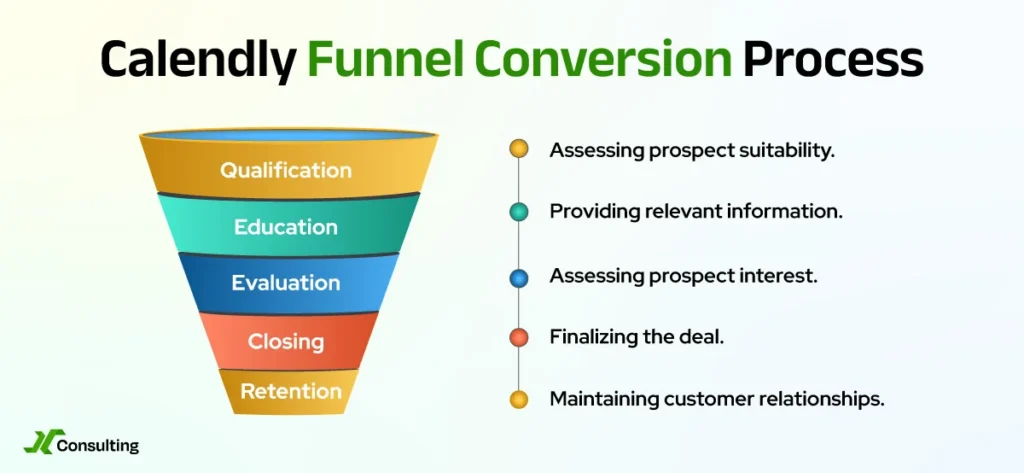
Most teams think of Calendly as a convenience tool, something that removes back-and-forth emails and saves time. While that is true, it only scratches the surface of what the platform can do. Calendly is flexible enough to support complex funnels, personalized booking experiences, and meaningful attribution tracking.

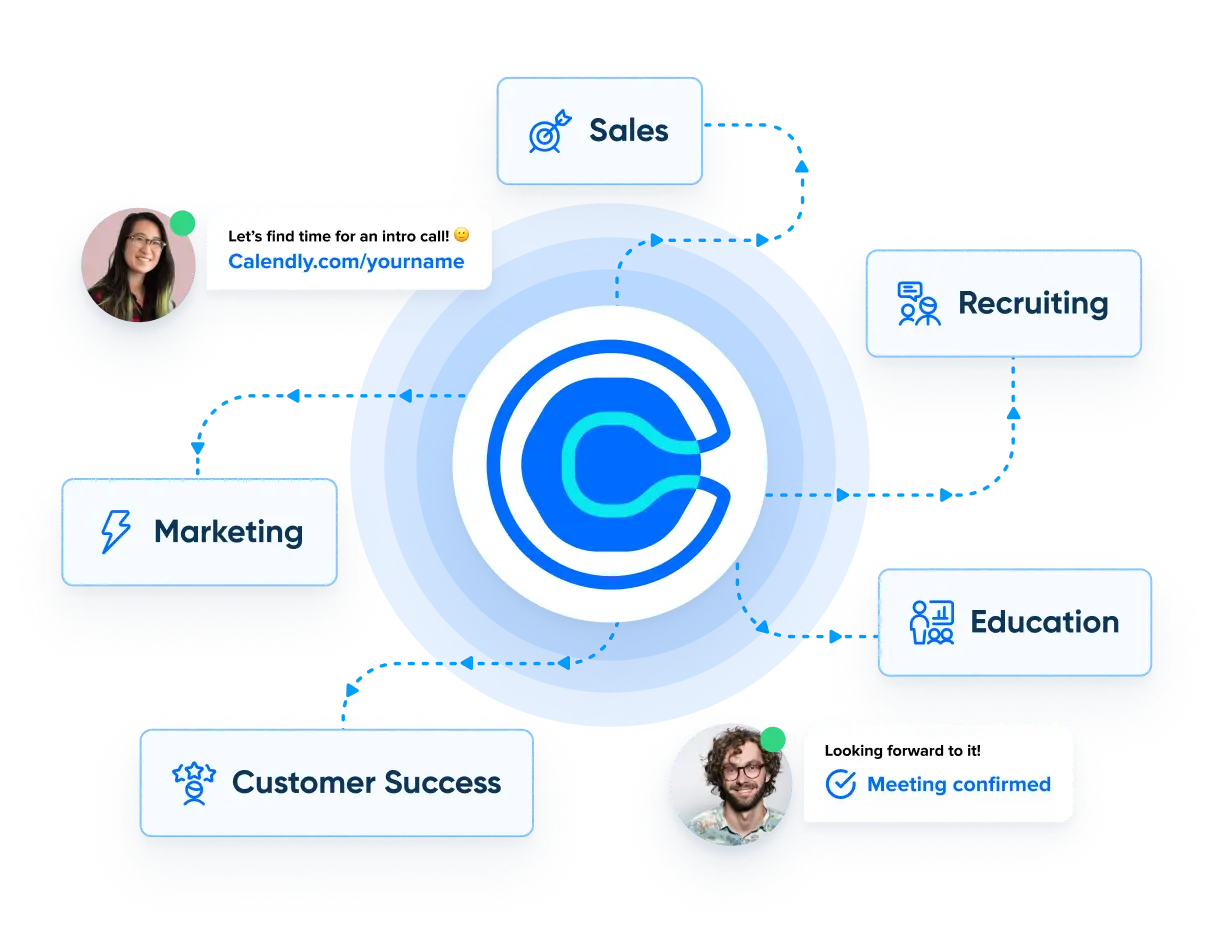
With multiple event types, routing forms, embedded scheduling, and UTM tracking, Calendly can mirror your funnel structure exactly. Each meeting type can be designed with a specific outcome in mind, whether that is qualification, education, evaluation, closing, or retention. When scheduling aligns with funnel intent, meetings feel purposeful rather than random.
A strategic Calendly setup ensures the right conversation happens at the right time with the right person. It also gives your team clearer insight into how prospects move through your funnel and where drop-offs or bottlenecks occur.
Top-of-Funnel Scheduling: Capture Interest Without Friction
At the top of the funnel, visitors are still exploring. They may have discovered your brand through a blog post, a paid ad, a search result, or a shared resource. Their curiosity is real, but their intent is still forming. Scheduling at this stage should feel inviting, low-pressure, and easy.
Embedding a general Calendly link on high-traffic content pages gives interested visitors a natural next step. However, sending everyone directly to a sales calendar often leads to low-quality bookings and wasted rep time. This is where routing forms add structure without increasing friction.
By asking a few simple questions before the booking happens, you can understand who the visitor is and what they need. Calendly can then route them appropriately, either to a sales conversation, an educational session, or a self-serve resource. This creates a better experience for both the prospect and your internal teams.
Top-of-funnel Calendly links also perform extremely well on thank-you pages. After someone downloads a guide or signs up for a webinar, offering a follow-up conversation keeps momentum alive. At this moment, the visitor is engaged and open to the next step, making scheduling feel helpful rather than intrusive.
Email nurture sequences benefit from this approach as well. Instead of pushing a meeting too early, you can introduce a booking option at the point where engagement signals are strongest. This helps you identify which content drives real intent and which content simply attracts passive readers.
Mid-Funnel Scheduling: Personalize the Path to Decision
Mid-funnel prospects are more informed and more selective. They have interacted with multiple touchpoints, explored your offerings, and begun evaluating whether you are the right fit. At this stage, generic scheduling experiences start to feel disconnected.
Personalized Calendly links are critical in the middle of the funnel. Demo pages, comparison content, and pricing-related campaigns all benefit from event types that are clearly defined and aligned with user intent. When prospects know exactly what the meeting is for, they are more likely to book and show up.
Rep-specific or territory-based links reduce friction and speed up response times. Instead of waiting for manual routing, prospects are instantly connected with the right person. This shortens the sales cycle and creates a smoother handoff between marketing and sales.
Calendly also allows form fields to be prefilled using known data or UTM parameters. When a prospect clicks a link from a campaign and sees their details already recognized, the experience feels intentional and professional. These small touches build trust at a critical decision-making stage.
Email campaigns in the mid-funnel become more effective when scheduling options match segmentation. A prospect interested in technical details may benefit from a walkthrough, while another evaluating ROI may prefer a short consult. Offering the right meeting type increases relevance and improves conversion quality.
Sales collateral plays a powerful role here as well. Case studies, product one-pagers, and landing pages used in outreach or account-based marketing can include embedded booking links. This removes unnecessary steps and lets prospects act immediately while interest is high.
Bottom-of-Funnel Scheduling: Protect Momentum and Close Faster
At the bottom of the funnel, timing and clarity matter more than ever. Prospects are close to making a decision, and any friction can delay or derail the deal. Calendly links used at this stage should be highly specific, clearly framed, and directly tied to the account owner.
Proposal review meetings are a prime example. When an account executive sends a proposal, including a dedicated scheduling link with a clear purpose keeps the conversation moving forward. The meeting title itself reinforces urgency and intent, helping stakeholders understand why the conversation matters.
Post-sale scheduling is just as important. Onboarding sessions, quarterly business reviews, and renewal conversations all benefit from dedicated event types. When customer success teams use structured Calendly links, they create consistency while making it easy for customers to stay engaged.
Embedding these links into onboarding emails, success plans, and renewal reminders demonstrates organization and commitment. It also reduces missed meetings and last-minute rescheduling, which can damage trust during long-term relationships.
From an internal perspective, stage-specific scheduling helps teams forecast workload and track engagement. When meetings are clearly categorized, leadership gains better visibility into pipeline health and customer retention activity.
Tracking Calendly Performance With Structure and Attribution
As your number of Calendly links increases, tracking becomes essential. Without a system, valuable insights get lost. Consistent naming conventions provide the foundation for clean reporting and alignment across teams.
When event types include team name, purpose, and funnel stage, it becomes easier to filter data in your CRM and analytics platforms. Sales, marketing, and customer success can all understand where meetings originate and how they contribute to revenue.
UTM parameters take this further by connecting scheduling activity to campaigns. By tagging Calendly links with source, medium, and campaign data, you can measure which efforts drive booked meetings, not just clicks or impressions. This shifts scheduling from an operational task to a measurable growth lever.
Integrated with tools like Google Analytics, HubSpot, or Salesforce, this data enables smarter optimization. Teams can double down on what works, refine underperforming campaigns, and build a more predictable funnel.
Final Thoughts: Turning Calendly Into a Growth Engine
Calendly is far more than a scheduling link. When aligned with your funnel, it becomes a personalized gateway that guides prospects forward, protects your team’s time, and reveals what truly drives conversions.
By replacing a single generic link with a structured, funnel-based system, you create experiences that match intent at every stage. Top-of-funnel visitors feel welcomed, mid-funnel prospects feel understood, and bottom-of-funnel buyers feel supported.
When combined with routing logic, CRM integration, and attribution tracking, Calendly evolves into a data-driven conversion engine. Teams that adopt this mindset stop treating meetings as calendar events and start treating them as strategic moments that move revenue forward.