
Calendly helps people book meetings without the back-and-forth emails. Instead of asking, “What time works for you?” users can share a booking link and let others pick an available time.
But Calendly is more than a simple scheduling tool.
This includes calendar sync, automated reminders, team scheduling, workflow automation, routing forms, CRM integrations, and payment collection. These features help you to reduce your manual work and save time for your teams (sales team, customer support teams, etc).
In this guide, we will break down the main Calendly features, how they work, and which features matter most for different use cases.

Key Calendly Features at a Glance
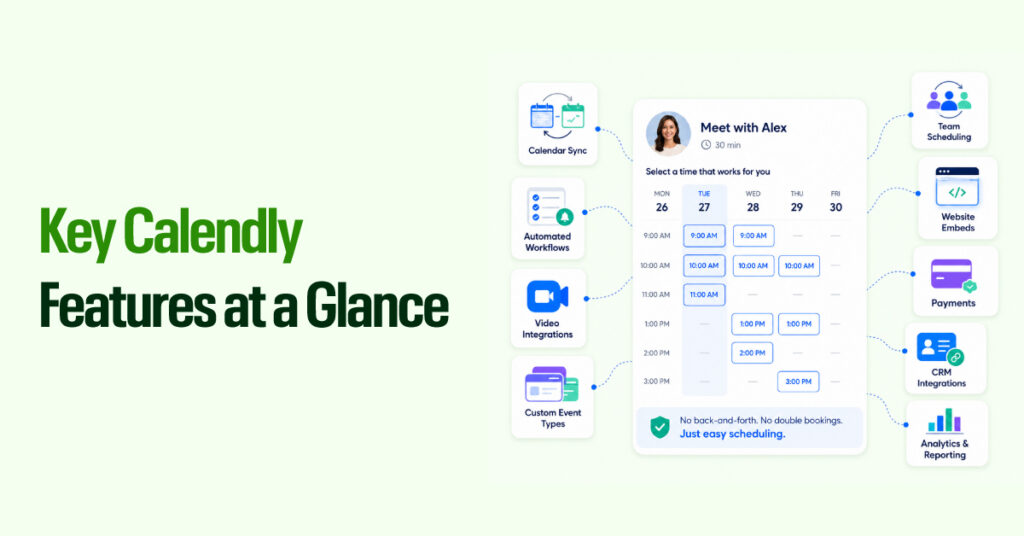
Calendly simplifies the scheduling process by providing a direct link for others to view your availability and book a time slot, effectively removing the manual effort of back-and-forth coordination. Beyond basic booking, the platform supports advanced professional needs with features like agenda setting to ensure meetings are productive and organized.
Here are the main things you can do with Calendly:
- Calendar Sync: Connect Google Calendar, Microsoft Outlook, Office 365, or iCloud to sync availability in real time and prevent double bookings
- Automated Workflows: Trigger confirmation emails, reminders, follow-ups, and cancellation notifications automatically, reducing no-shows and manual communication.
- Video Conference Integration: Generate Zoom, Google Meet, or Microsoft Teams links automatically when a booking is made.
- Custom Event Types: Create distinct meeting formats one-on-one calls, group sessions, webinars, consultations with custom durations and booking rules.
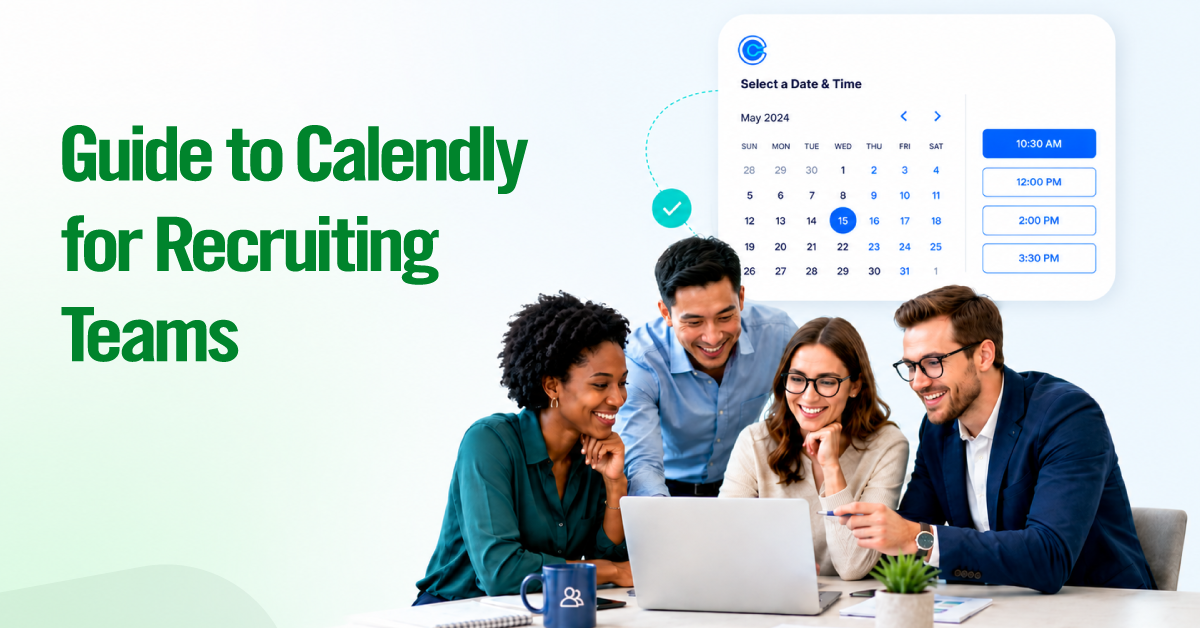
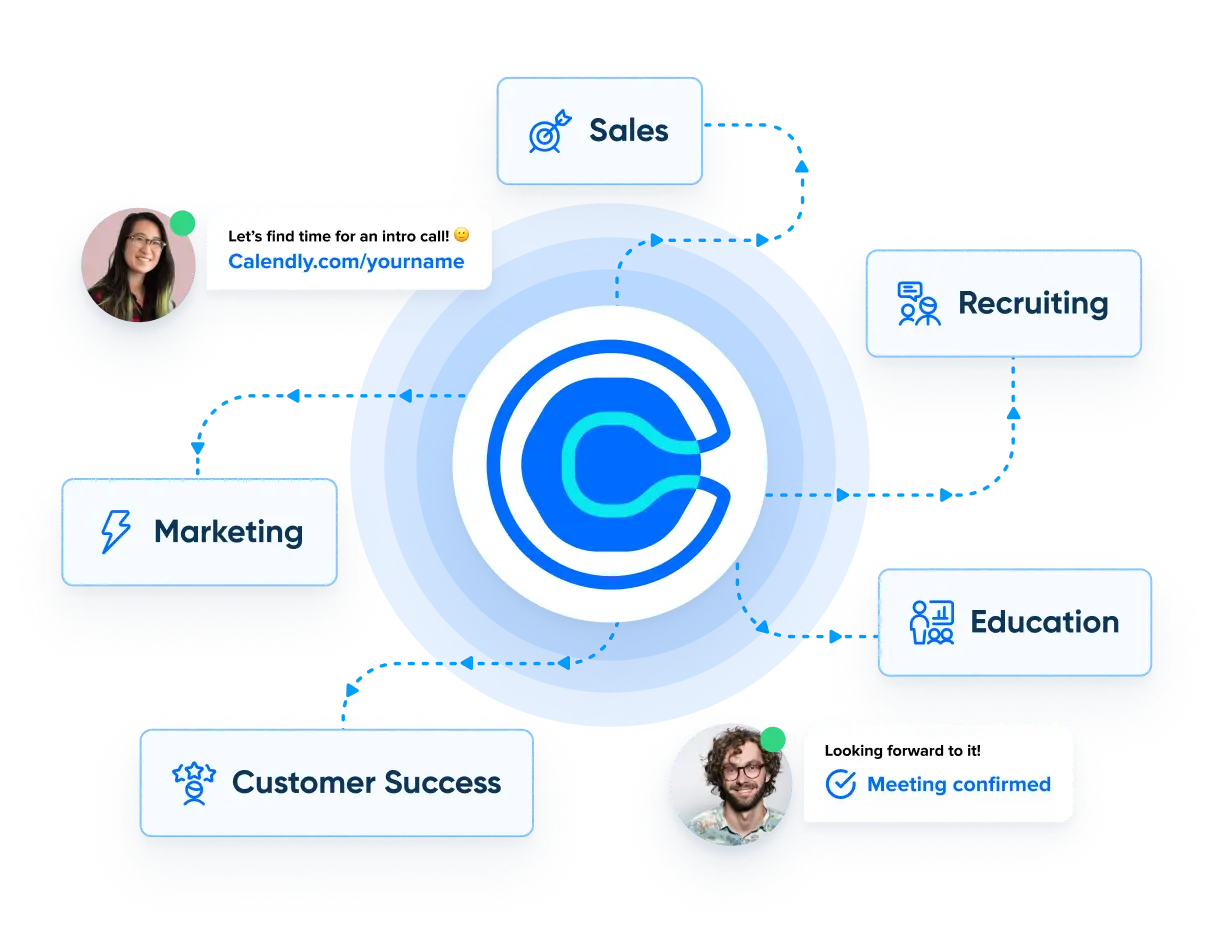
- Team Scheduling: Use round-robin assignment, collective scheduling, and shared team availability to coordinate meetings across sales, recruiting, and support teams.
- Website Embeds: Add booking widgets, popups, or embedded scheduling pages to websites and landing pages so visitors can book without leaving the page.
- Payment Processing: Collect payments before meetings via Stripe and PayPal for consultations, coaching, and paid services.
- CRM Integrations: Sync meeting activity with HubSpot, Salesforce, Pipedrive, and other CRM platforms to automate lead management and activity tracking.
- Analytics & Reporting: Track scheduling activity, booking trends, and team usage data across paid plans.
Core Scheduling Features
Automated Meeting Scheduling
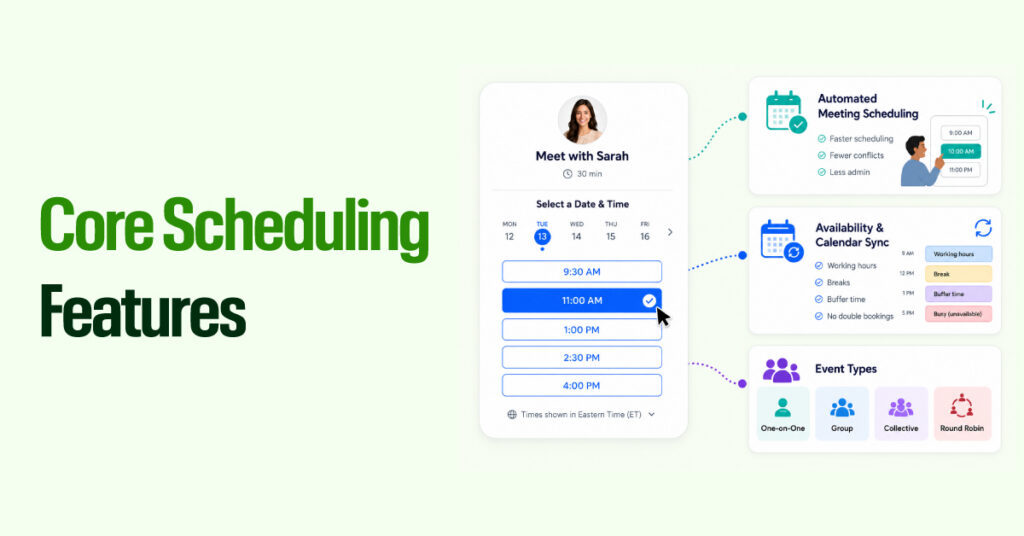
Calendly’s core function is eliminating the scheduling back-and-forth. When someone books through your link, Calendly checks your calendar in real time, shows only available slots, and confirms the appointment automatically, no manual coordination required.
Benefits include:
- Faster scheduling
- Fewer scheduling conflicts
- Better customer experience
- Less admin work
This is the feature most businesses start with, and it holds up across simple and complex use cases.
Availability & Calendar Sync
The availability system lets you define working hours, daily meeting limits, buffer times between calls, and minimum scheduling notice. Calendly hides unavailable time automatically and syncs bookings directly to your calendar, reducing double bookings without additional admin work.
Event Types in Calendly
Calendly has four main event types: one-on-one, group, collective, and round robin.
- One-on-One: A single host and one invitee. Used for intro calls, interviews, client check-ins, and 1:1 coaching sessions.
- Group: One host, multiple invitees booking the same time slot. Best for webinars, group demos, virtual classes, and office hours.
- Collective: Two or more hosts from your team join the same meeting. Calendly only shows times when everyone is available. Best for panel interviews, multi-stakeholder sales calls, and kickoffs.
- Round Robin: Bookings are distributed across a team based on availability, priority, or even load balancing. Best for inbound demos, support intake, and lead distribution.
Free plan users get one active event type. The Standard plan and above unlock unlimited event types.
Workflow Automation Features
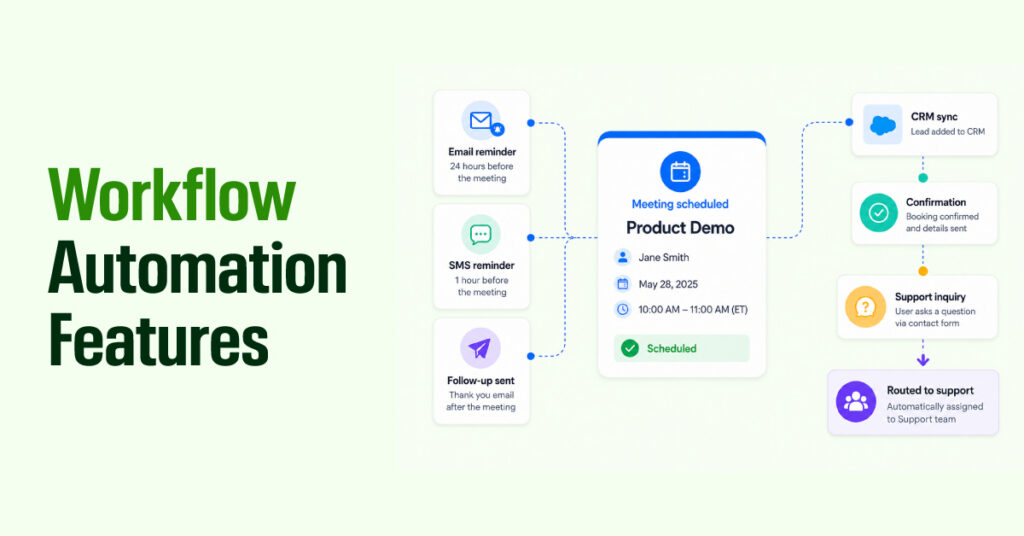
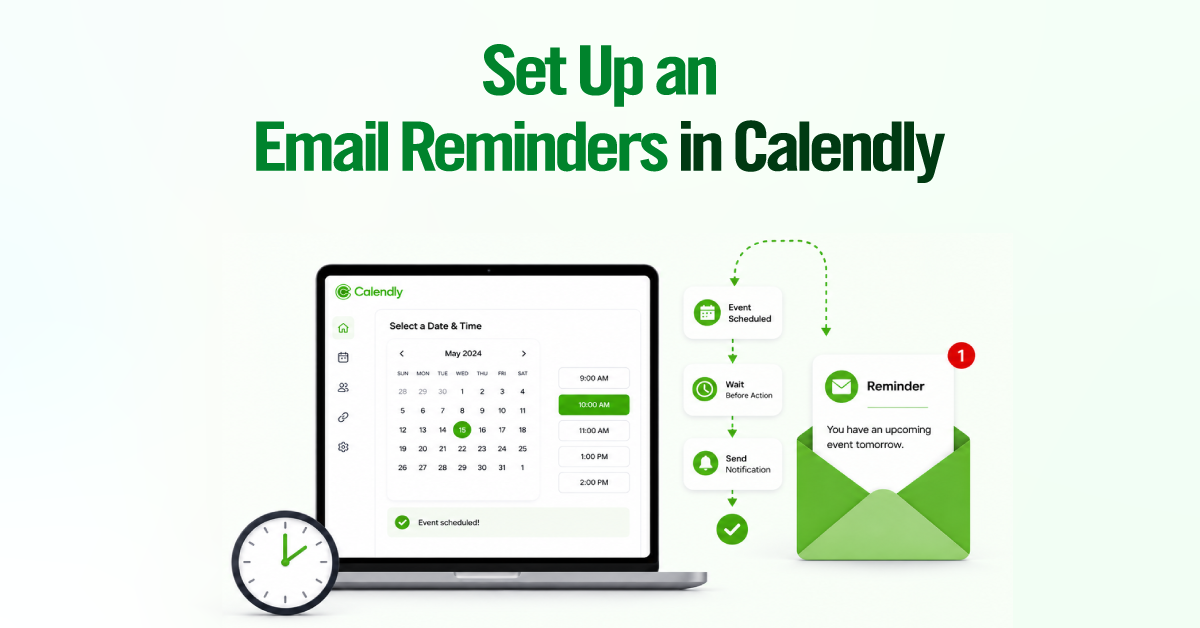
Automated workflows let you trigger emails and SMS texts before and after meetings without manual intervention. Common setups include a reminder email 24 hours before a meeting, an SMS notification one hour before the event, and a follow-up message after the meeting ends.
These automations reduce no-shows, help attendees arrive prepared, and free up time your team would otherwise spend on manual outreach. SMS credits are included in the Standard and Teams plans (250 per user per month).
Automated Notifications & Reminders
For teams using Calendly alongside a CRM, workflow automation is where the real operational value is. When configured properly, a booking can automatically create a contact record in HubSpot, update a deal stage in Salesforce, trigger an onboarding sequence, or route the lead to the right rep based on invitee answers.
This is the feature that separates Calendly as a scheduling tool from Calendly as an intake and qualification layer for your pipeline.
Workflow Automation
You can connect automation tools and CRM platforms to improve lead management and streamline your workflow. A proper workflow setup can automatically send leads to your CRM, trigger onboarding and confirmation messages, and route inquiries to the right team.
For example, if a customer submits a support inquiry, the system can automatically forward the lead to your support team. This helps your workflow run faster and more efficiently.
Calendly Integrations
CRM Integrations
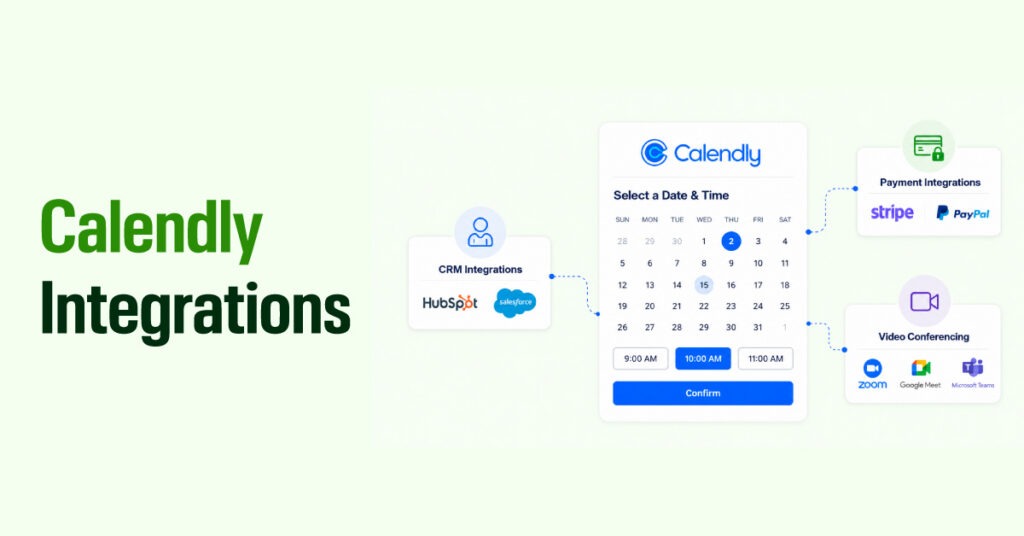
Calendly connects natively to HubSpot and Salesforce (Teams and Enterprise plans). Standard plan users can connect HubSpot and use Zapier or Make for other CRM sync. Pipedrive, Zoho CRM, and other platforms are typically handled via Zapier or webhooks.
For sales teams, CRM integration is the highest-leverage Calendly feature — it closes the loop between a booked meeting and your pipeline without requiring a rep to log anything manually.
Payment Integrations
Calendly lets you collect payments before a meeting starts via Stripe and PayPal (Standard plan and above). This works well for consultants, coaches, and service providers selling blocks of time.
Calendly also supports meeting packages someone pays once for a set number of sessions and books them individually over time. Payments are collected at booking, which typically reduces no-shows.
Video Conferencing Integrations
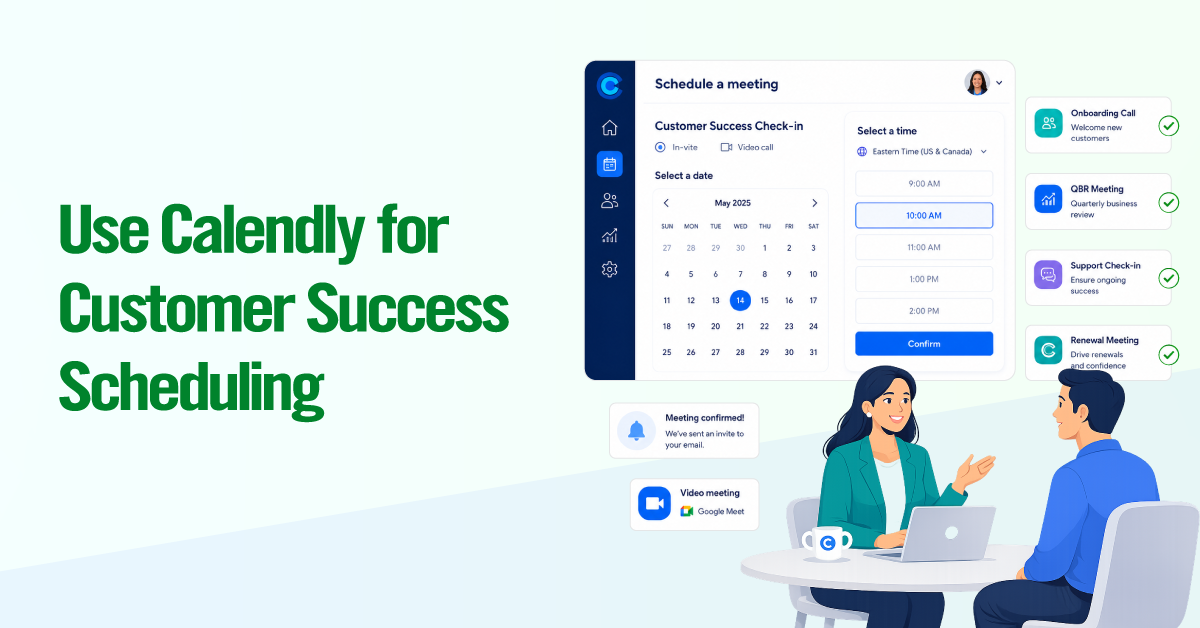
Video conferencing tools like Zoom, Google Meet, and Microsoft Teams can be connected easily. Once integrated, meeting links are automatically generated whenever a booking is made, and notifications are sent via email. This saves time and reduces manual setup errors.
Advanced Calendly Features
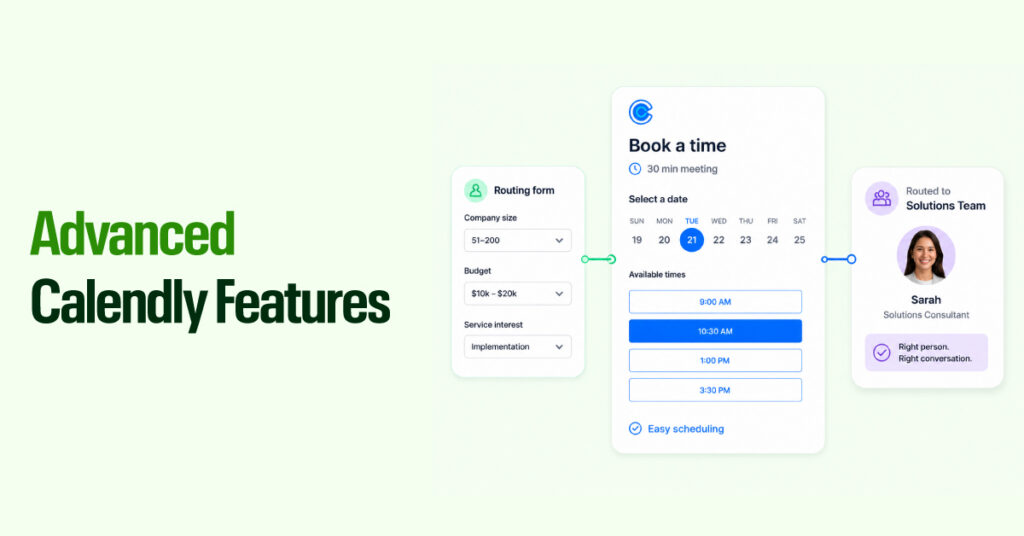
Beyond the all of scheduling features, its has some feature that makes to filter the lead more precious and quality.
Routing Forms
Routing forms let you qualify leads before a booking is confirmed. You ask questions company size, budget range, service interest, team role and route the invitee to the right meeting type, team member, or department based on their answers.
This is the feature most worth upgrading to the Teams plan for if your team handles mixed inbound volume. Without routing forms, every inbound lead books the same meeting type regardless of fit. With routing, high-value prospects reach the right rep immediately and unqualified traffic routes to a lower-touch flow.
Simplify meeting scheduling
Simplicity is one of the main reasons businesses rely on Calendly for daily scheduling. The platform helps to remove scheduling friction, email back-and-forth, manual coordination, and booking confusion, so every meeting feels fast, clear, and organized.
Branding and Website Embedding
Booking Page Customization
Your Calendly booking page is often the first branded touchpoint a prospect sees. Paid plans let you customize:
- Logo and brand colors
- Booking page URL (e.g., calendly.com/your-company)
- Welcome message and event description
- Custom intake questions beyond name and email
- Confirmation page text and redirect URL after booking
- Calendar invite content and meeting location details
The Free plan includes basic customization but keeps the Calendly logo. Standard plan and above let you remove Calendly branding.
Calendly AI Features (2026)
Calendly added several AI features in 2025 and 2026. These are still rolling out, but here’s what’s available now:
- Meeting prep summaries that pull context from past emails and CRM notes before a call
- Smart time suggestions based on past booking patterns
- AI-drafted follow-up emails after meetings, ready for editing and sending
- AI Assistant (beta): a chat-based helper for answering schedule questions and suggesting workflow improvement
These features are still evolving, and availability varies by plan. Check Calendly’s current feature list for the latest status.
Calendly Pricing: Free vs Paid Plans
The free plan of Calendly covers basic scheduling needs. You get one active event type, basic calendar connections, booking links, and simple scheduling pages, which works well for individuals with light usage.
Paid plans start from $12 per month. Paid plans are divided into Standard, Teams, and Enterprise options. These unlock more advanced capabilities such as workflow automation, team scheduling, CRM integrations, routing forms, multiple event types, and admin controls. These features are designed for teams that handle high meeting volumes and need more control and automation.
A comparison table is provided below:
| Free Plan (Always Free) | Paid Plans (Standard, Teams, Enterprise) |
| Designed for individual / personal use | Built for professionals, teams, and enterprises |
| 1 event type only (e.g., one meeting type) | Unlimited event types (Standard+ feature) |
| Connect 1 calendar only | Connect multiple calendars (up to 6) for conflict checking |
| Basic scheduling + booking page customization | Advanced scheduling workflows + full customization |
| Includes video conferencing integration (zoom, google meet, microsoft team) | Advanced integrations (CRM + automation tools) |
| Basic availability settings | Advanced availability + admin controls |
| Mobile app + browser extension | Team management + reporting + admin features |
| Simple reminders + confirmations | Automated workflows, reminders, outreach automation |
| No team collaboration features | Team scheduling (round robin, routing, lead assignment) |
| Limited integrations | Deep integrations (HubSpot, Salesforce, Stripe, Zapier, etc.) |
| Best for freelancers or solo users | Best for sales teams, growing companies, enterprise ops |
Final Thoughts
In summary, calendly offers many features that help automate scheduling but still there are some limitations regarding branding control, deeper customization, and support options that can feel limited depending on your plan.
If you’re constantly managing meetings in your day-to-day work, Calendly is a solid choice with enough flexibility to handle both simple and team-based scheduling needs.
Have you tried Calendly before? What has your experience been like? Share your thoughts or questions in the comments below.
Calendly is a strong scheduling tool for most professional use cases. The Free plan works for simple personal scheduling. The Standard plan covers most freelancer and small business needs. The Teams plan delivers real operational value for sales, recruiting, and customer success teams that need routing and distribution.
The features worth prioritizing are the ones that connect Calendly to your existing workflow; CRM integration, routing forms, and workflow automation. The features that rarely deliver their promised value are those built for volume or enterprise scale that most teams never fully use.
If you are evaluating Calendly for a team, run the 14-day trial on the Teams plan, test the routing forms and CRM sync against your actual workflow, and decide from there. The upgrade from Free to Standard is almost always worth it once you outgrow one event type. The jump from Standard to Teams is worth it the moment you need round-robin distribution or Salesforce integration.